
Second week, I rebuilt the website from scratch. Instead of using vibe coding, I wrote the code myself to recreate the website.
During this process, I started thinking about the five questions. I then read Louis Althusser’s Ideology and Ideological State Apparatuses,
which gave me a lot of inspiration. People live in a society surrounded by ideology. Their behaviour is influenced by ideology, but most of the time, they are not aware of its presence. I think this is similar to programming in some ways. We cannot see a single line of code in the final webpage, but every action on the website follows rules written in code. So I started trying to make this code visible.
At first, I changed the text entered by users into its JavaScript format. Then I also changed the visual style of the video, using binary code and the box model to represent the images. However, I realised that the way the website worked had not changed at all. My changes had only created a new visual style. (ITERATION2-3)
version 2 — click to explore
For the best experience, open the website in a new tab .
I then read Gilbert Simondon’s On the Mode of Existence of Technical Objects.
He suggests that people can be very good at using technology without understanding how it works internally. So I tried allowing users to directly change the code on the website to control the direction, size and opacity of the text. I also tried turning users’ mouse movements into code, or making the
background display code that changed into the video image when the mouse moved across it. But I found that these experiments either only changed the visual appearance, or simply taught users a new way to operate the website, rather than helping them understand how the code actually works. (ITERATION4-6)
version 4 — click to explore
For the best experience, open the website in a new tab .
After looking at Casey Reas’s Software Structures,
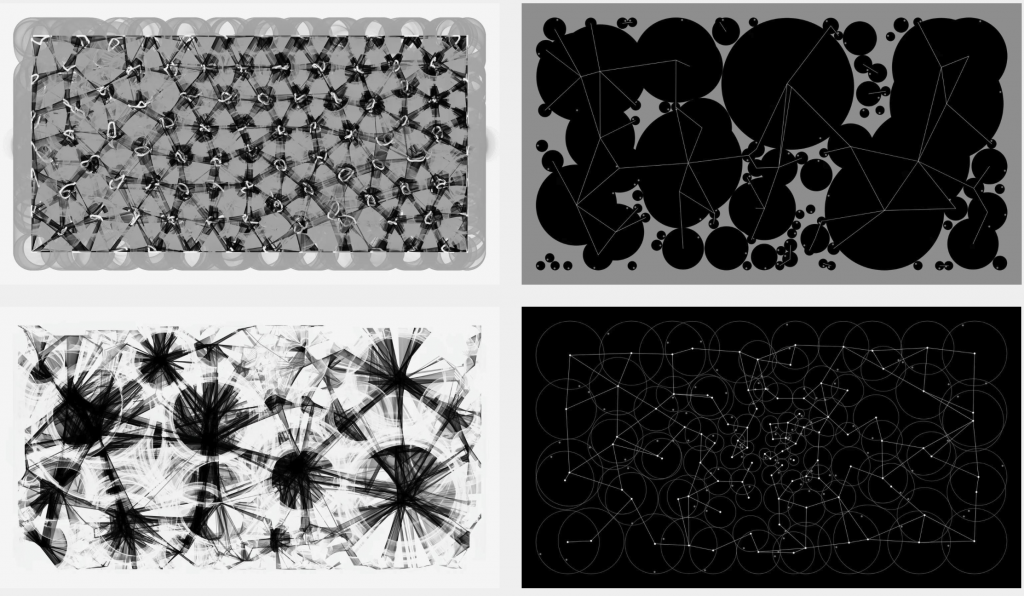
I realised that what is worth observing is not what code looks like, but how technology turns human actions into information that it can process. I don’t need users to experience the code running directly. I just want them to realise that when they use a digital tool, the technology itself is also working behind the scenes.
Simondon emphasises that technical objects have their own internal structures and ways of working. For example, when users draw a path to follow a person or a car in the video, the code is simply recording a series of changes in position.
Finally, I divided these paths into four colour groups, trying to make the information processed by the technology easier for users to see and understand.(ITERATION7-11)
version 7 — click to explore
For the best experience, open the website in a new tab .
Leave a Reply