**Written in Chinese, translated by ChatGPT
In the first week, I chose Political Buttons from Harvard Digital Collections as the subject of my research.
As I carefully examined these political buttons, I noticed something strange: I could understand every English word printed on them, but I couldn’t fully understand what they meant. I knew what the words meant linguistically, but I was unfamiliar with the political figures, historical events, and cultural contexts they referred to. Although these buttons communicated specific political messages, their meanings remained unclear to me.
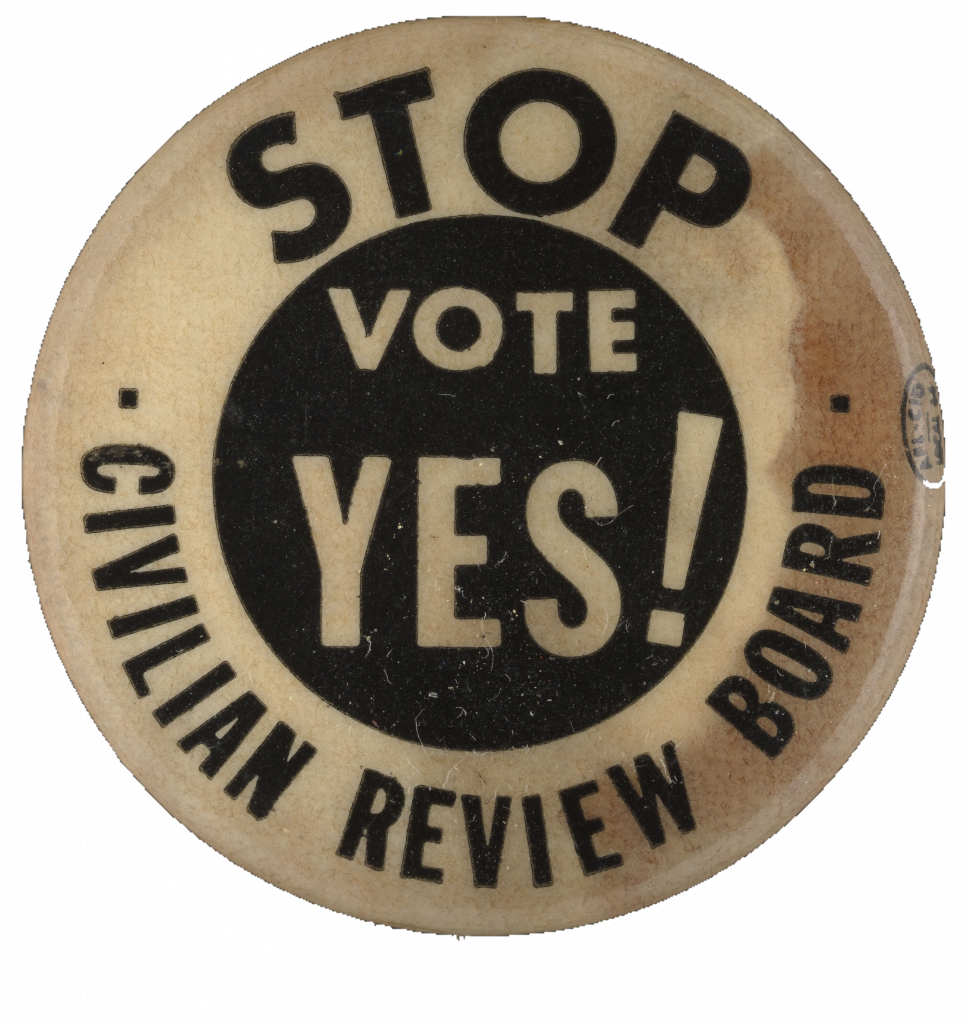
This confusion came partly from my lack of familiarity with American society and its political culture. What surprised me even more was that, during this research, I gradually realised how little I knew about how democracy actually works. Before this, much of my understanding of elections had come from scenes I had seen on television, such as people putting their ballots into a ballot box. I was familiar with the concepts of democracy and elections, but I didn’t really understand how they operated in practice, or how political campaigns, candidates, parties, and voters were connected.
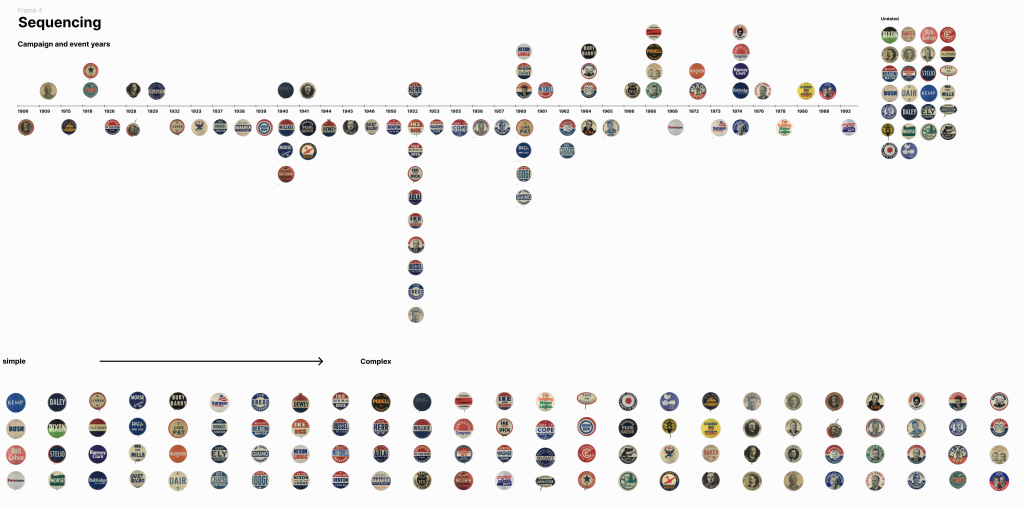
Because of this lack of knowledge, I decided not to research or add historical background information to the buttons at first. Instead, I organised them solely according to the visual characteristics I could directly observe. I treated the buttons as visual objects made up of text, colours, portraits, and graphic elements, and tried to establish relationships between them through
Classifying
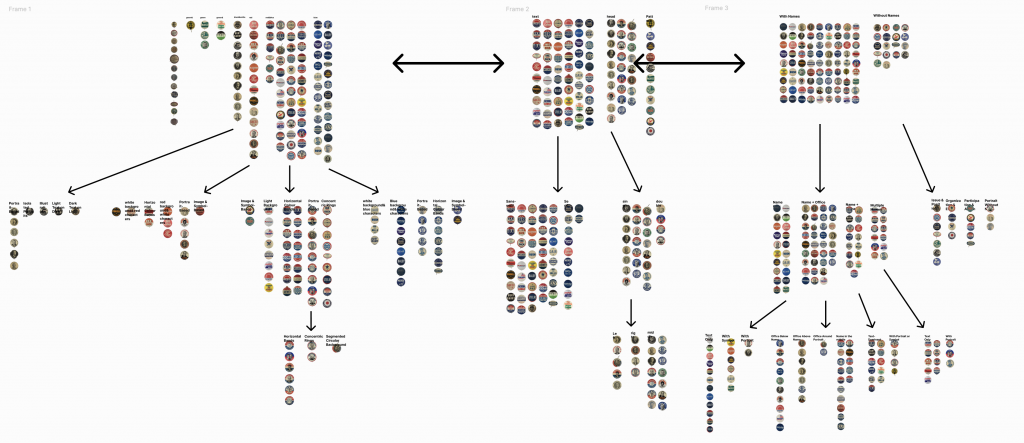
Sequencing
Framing
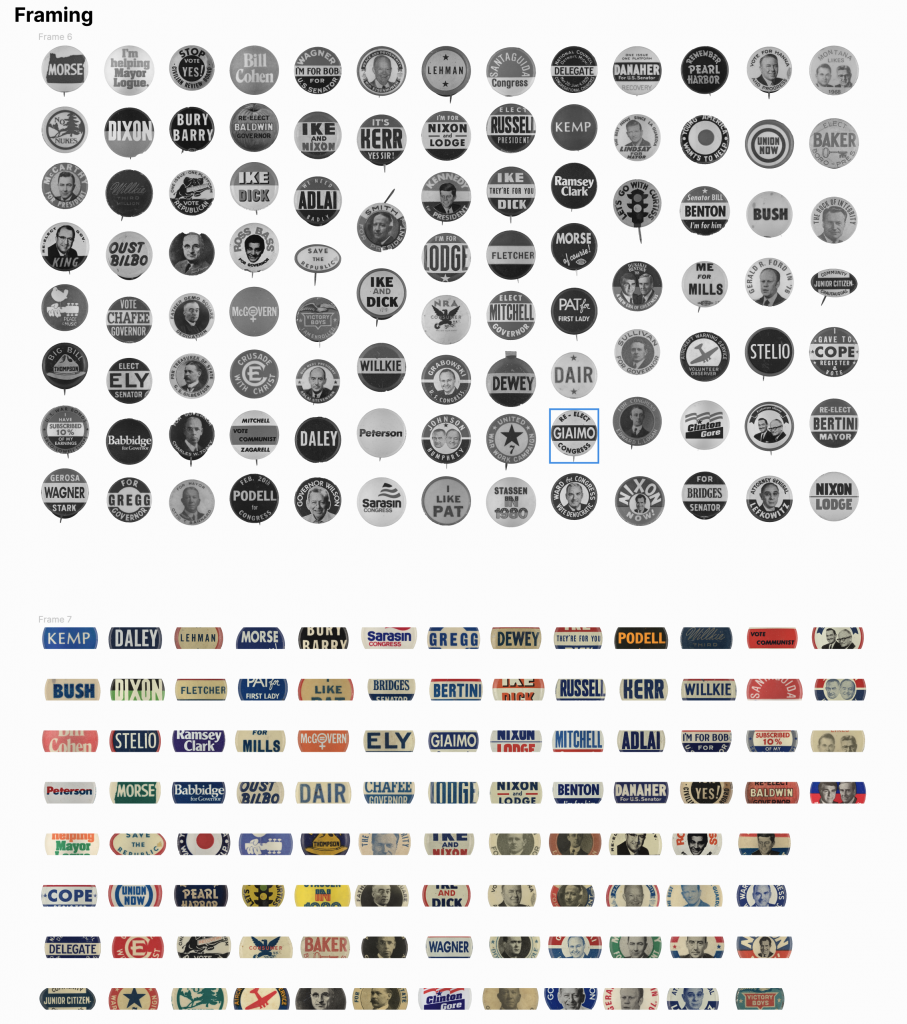
However, as my classification became increasingly detailed, I realised that although I could create more and more complex visual systems, they still didn’t help me understand the original political meanings of these buttons. Buttons that looked similar did not necessarily represent the same political positions, while buttons associated with the same political movement could look completely different. I began to realise that the classification systems I had created were not a reconstruction of the objects’ original meanings, but rather a reorganisation based on my own knowledge and experience.
Later, I thought about how Raf Simons often uses large numbers of pins as decorative elements in his fashion designs.
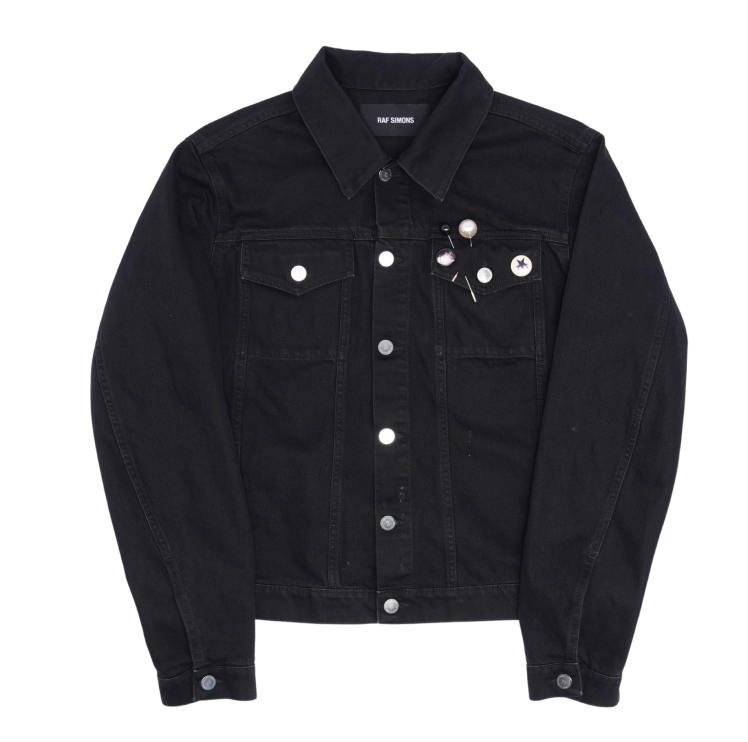
Inspired by this approach, I reproduced the buttons from the digital archive as physical objects that could be worn, and gradually began pinning them onto clothing.
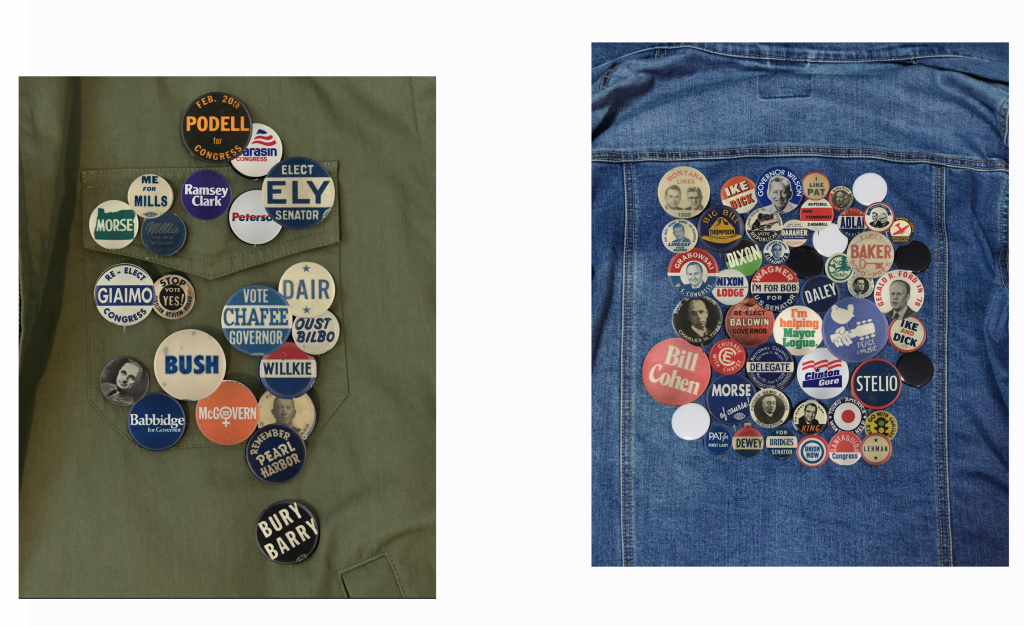
This process made me reconsider the relationship between the buttons and their viewers.
When there is only one political button on a piece of clothing, viewers might interpret it as an expression of support for a particular politician or political idea. However, when more and more buttons from different political backgrounds are brought together on the same garment, this relationship seems to change. What were originally individual political statements gradually become part of a dense visual composition, in which the colours, shapes, and arrangements of the buttons become increasingly prominent. They begin to remind me of fashion, decoration, and consumer culture, rather than simply political propaganda.