
second week, I began to wonder why the same objects could be interpreted so differently simply because of changes in their quantity, arrangement, and display context.
Looking back at my research process, I realised that this transformation was closely connected to the confusion I experienced when I first encountered these buttons. Because I lacked the political and historical knowledge needed to understand them, I naturally paid more attention to their visual forms and reorganised and used them according to the criteria I was familiar with.
This also made me think about how many cultural symbols undergo similar transformations as they circulate through different contexts. For example, denim clothing was once closely associated with particular forms of labour and ways of life, but today it also exists as a widely popular fashion item. People do not necessarily need to understand its history in order to appreciate, purchase, or wear it.
Could this be related to the circulation of cultures through globalisation? Could the passage of time cause objects that once had specific social functions or symbolic meanings to gradually enter new aesthetic systems? Or perhaps, when an object is viewed by someone from a different cultural background, their lack of familiarity with its original context allows them to move beyond established ways of interpreting it and understand it from a different perspective?
For me, these American political buttons belong both to a distant historical period and to a political culture that I am unfamiliar with. This distance in time and culture allows me to approach them primarily through visual observation. At the same time, however, I began to realise that this apparent freedom of interpretation might depend on overlooking their original meanings.
As a result, my attention gradually shifted from the buttons themselves to how their meanings change across different contexts. When an object is repeatedly reproduced, classified, arranged, circulated, and reused, some of its original information may be weakened or overlooked, while new connections and interpretations begin to emerge.
In the final book, I juxtaposed the reproduced buttons, worn on clothing, with historical images related to them. By bringing these images together, I wanted readers to encounter both the new visual relationships formed in the present and the political contexts of the past.
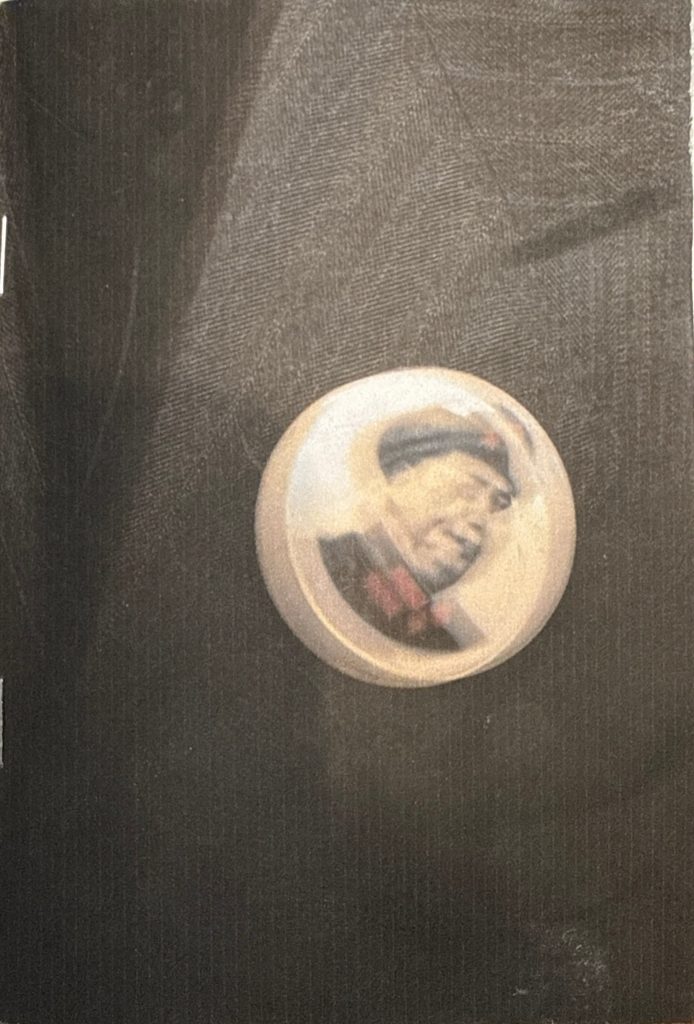
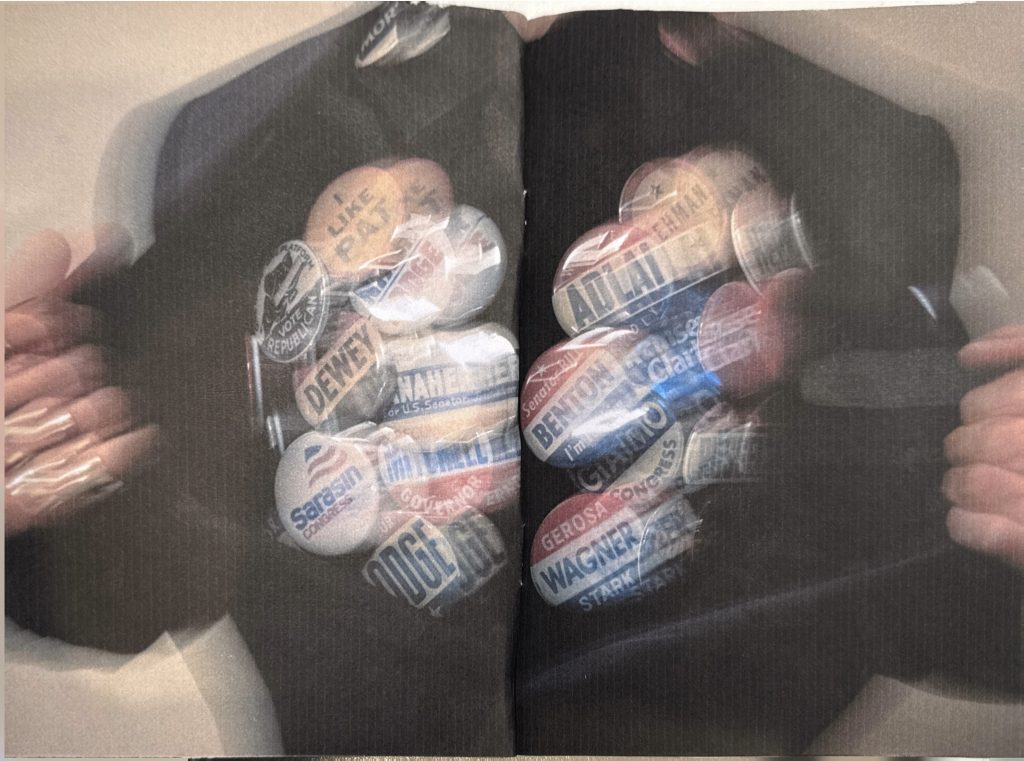
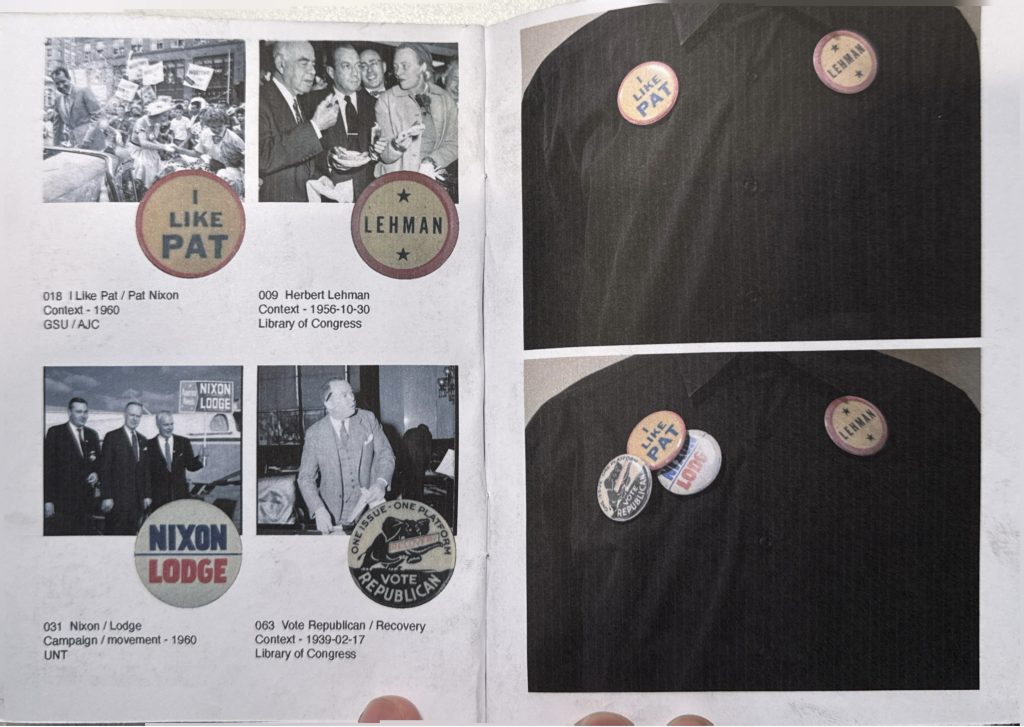
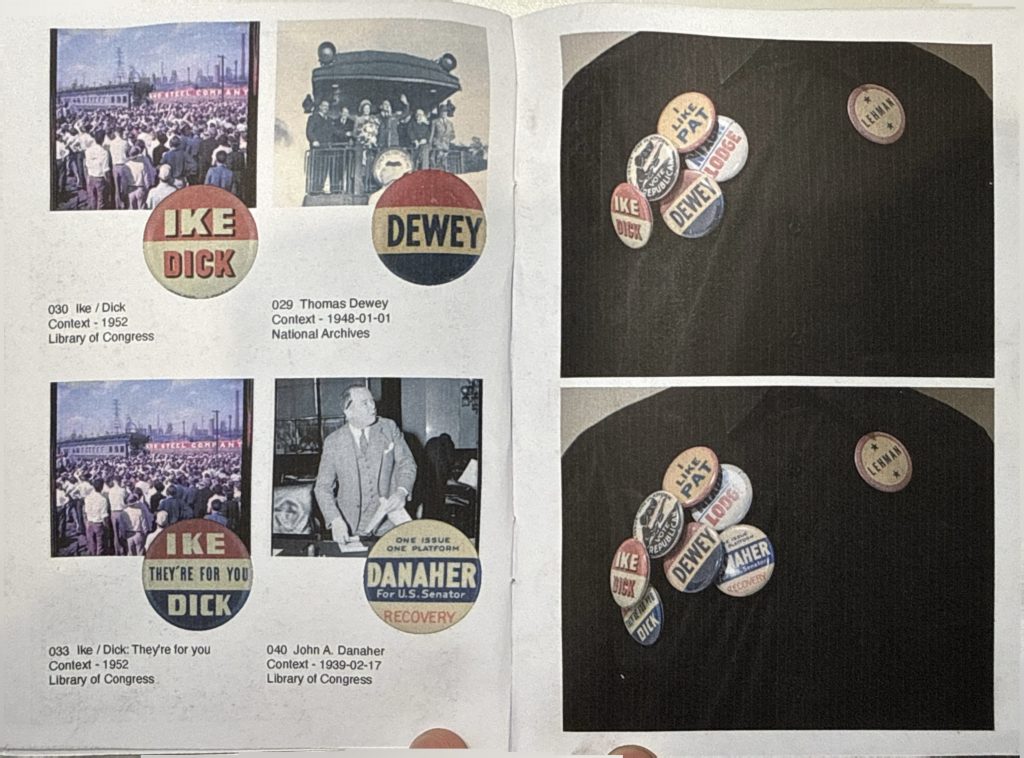
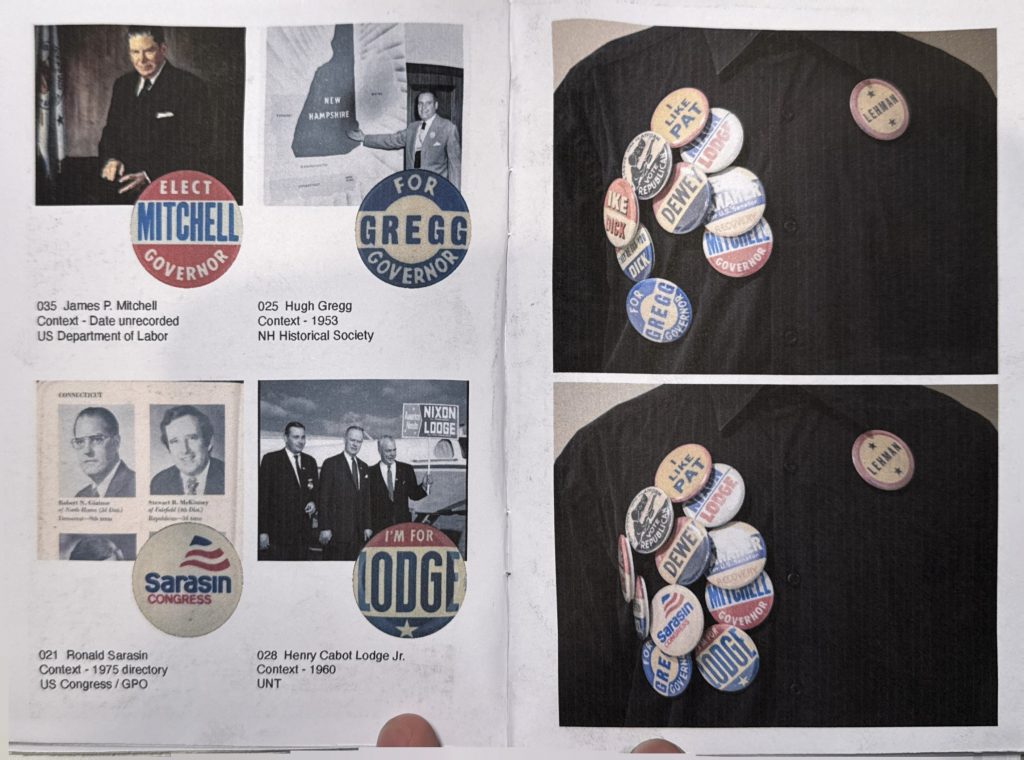
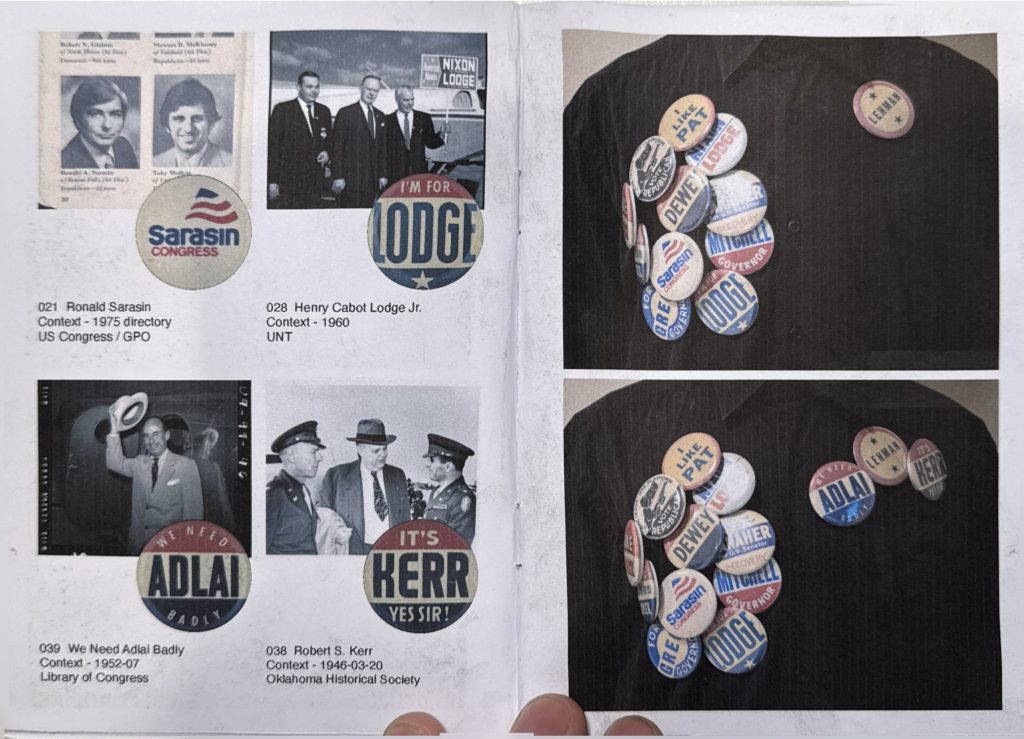
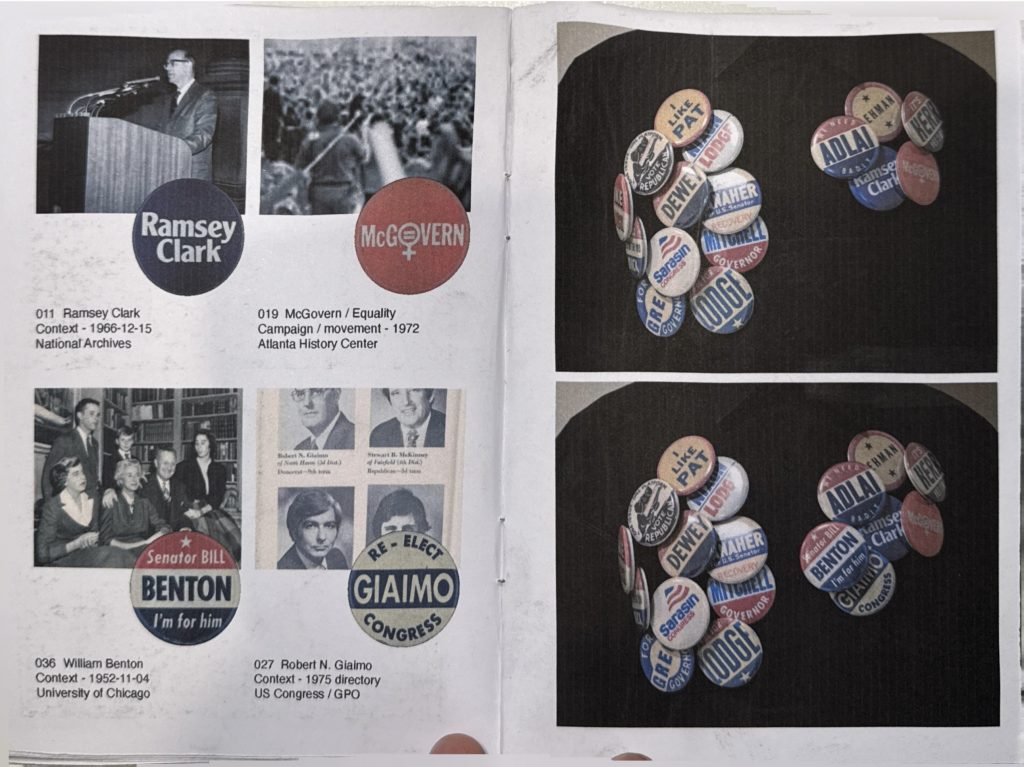
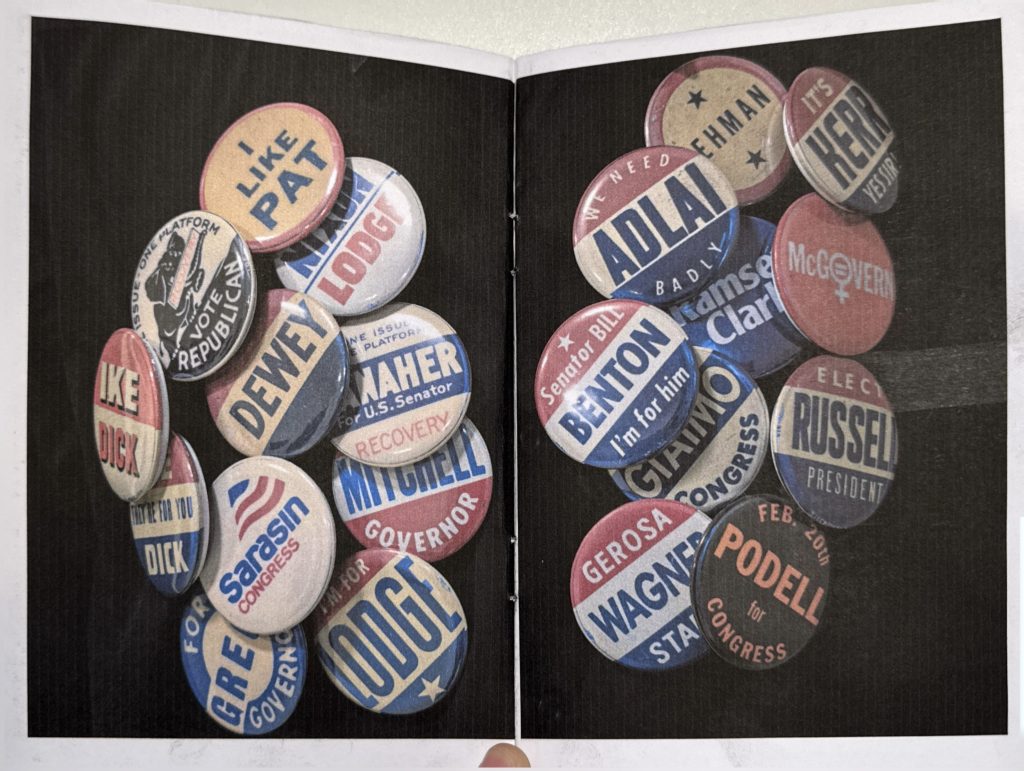
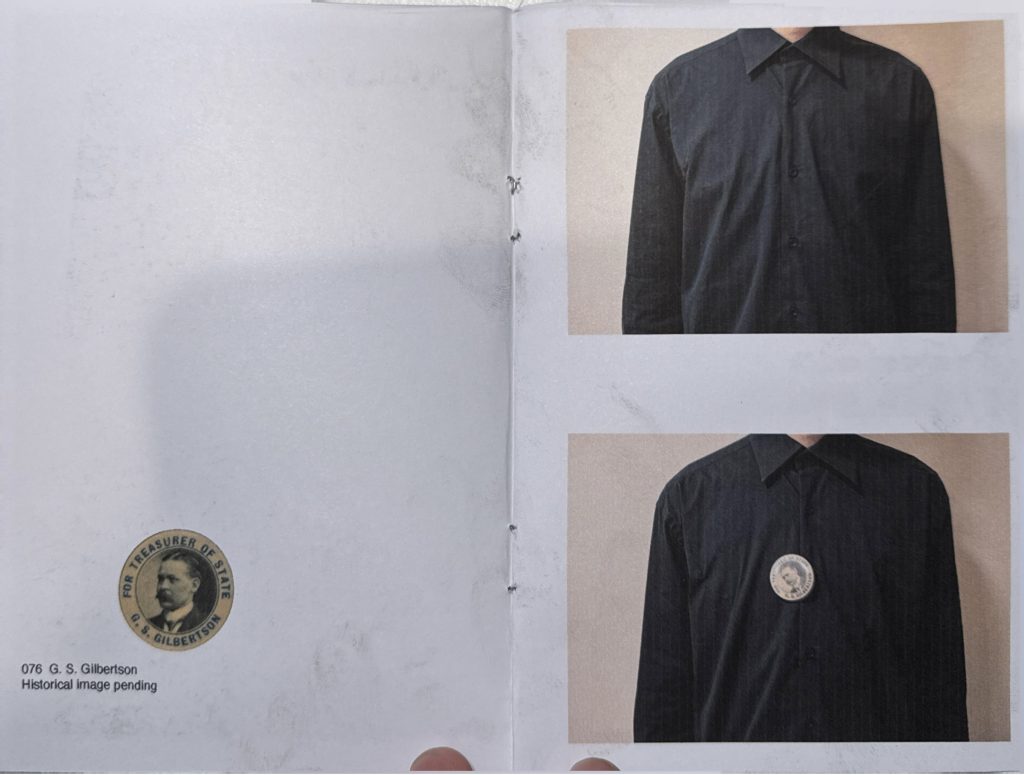
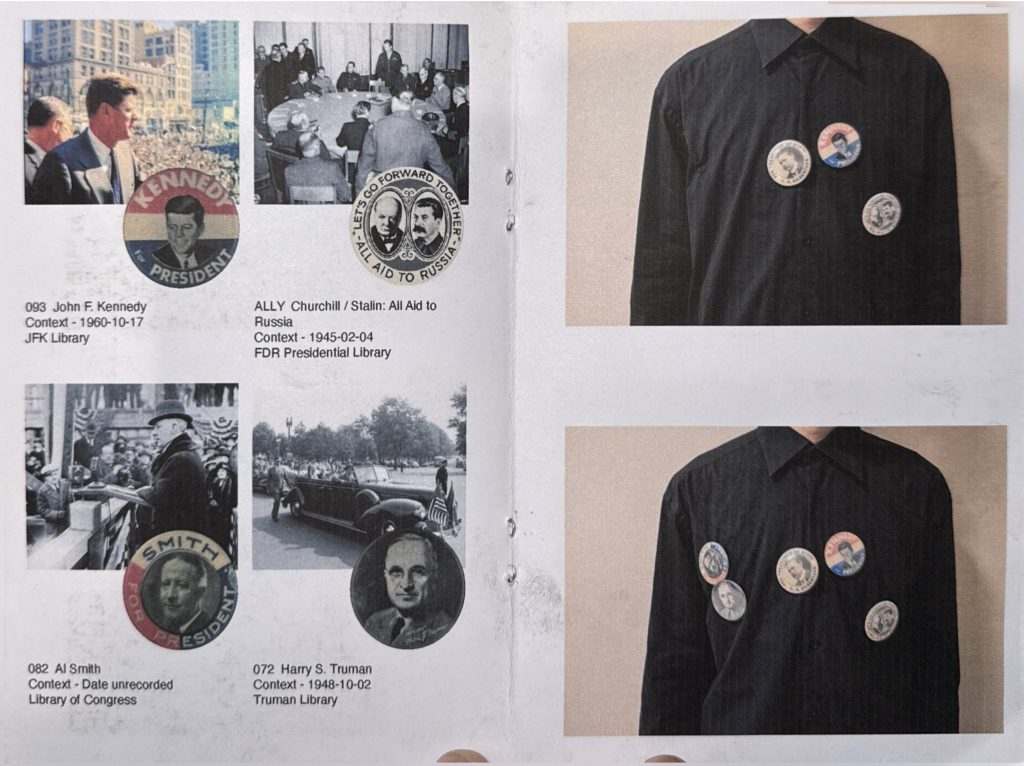
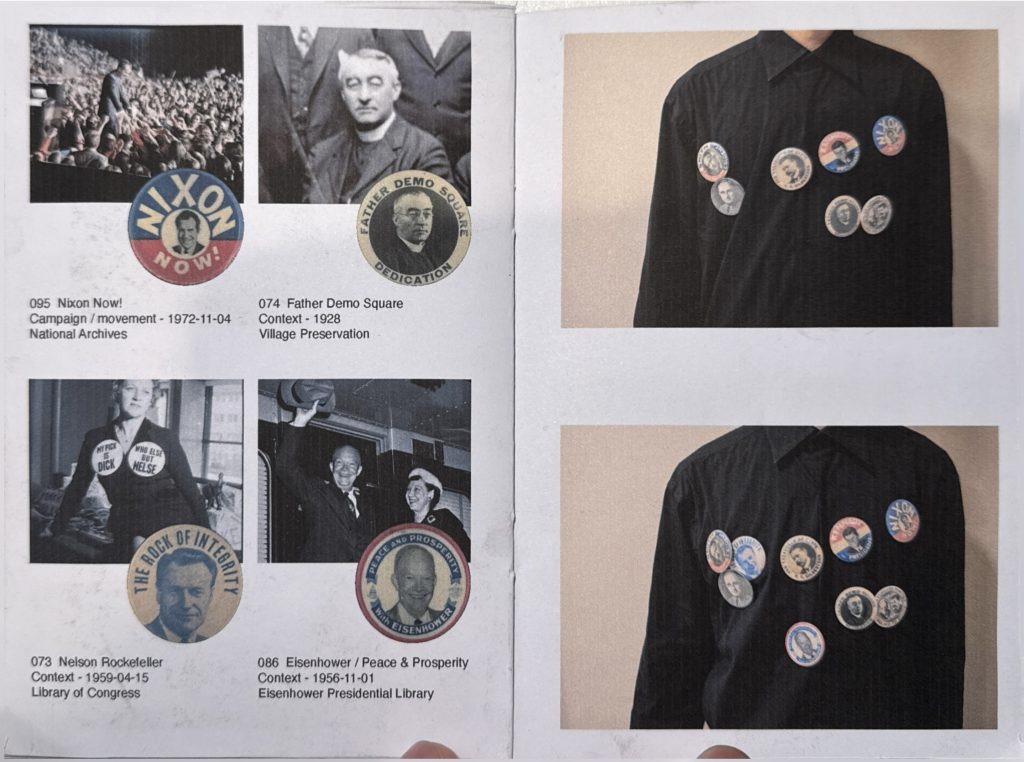
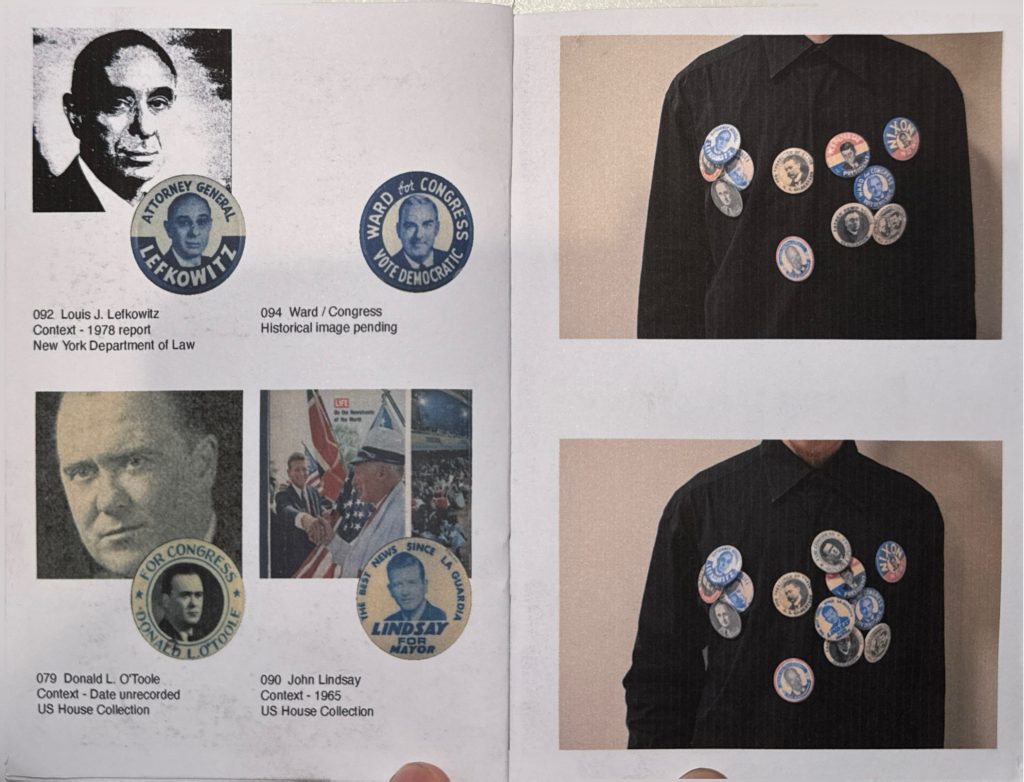
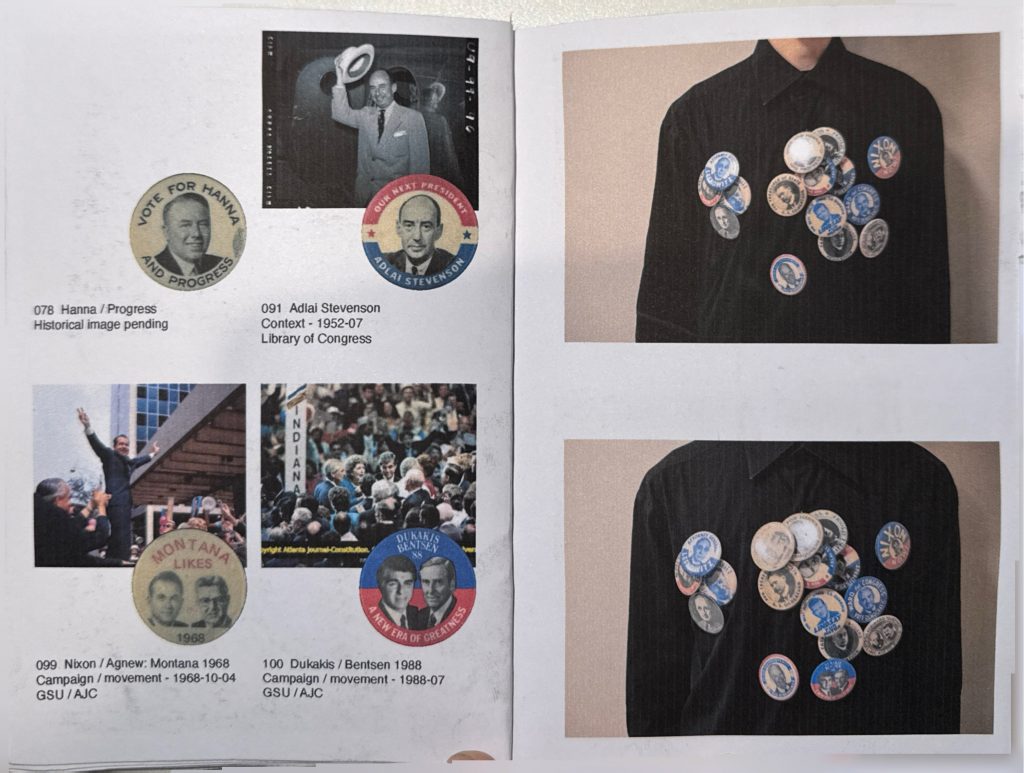
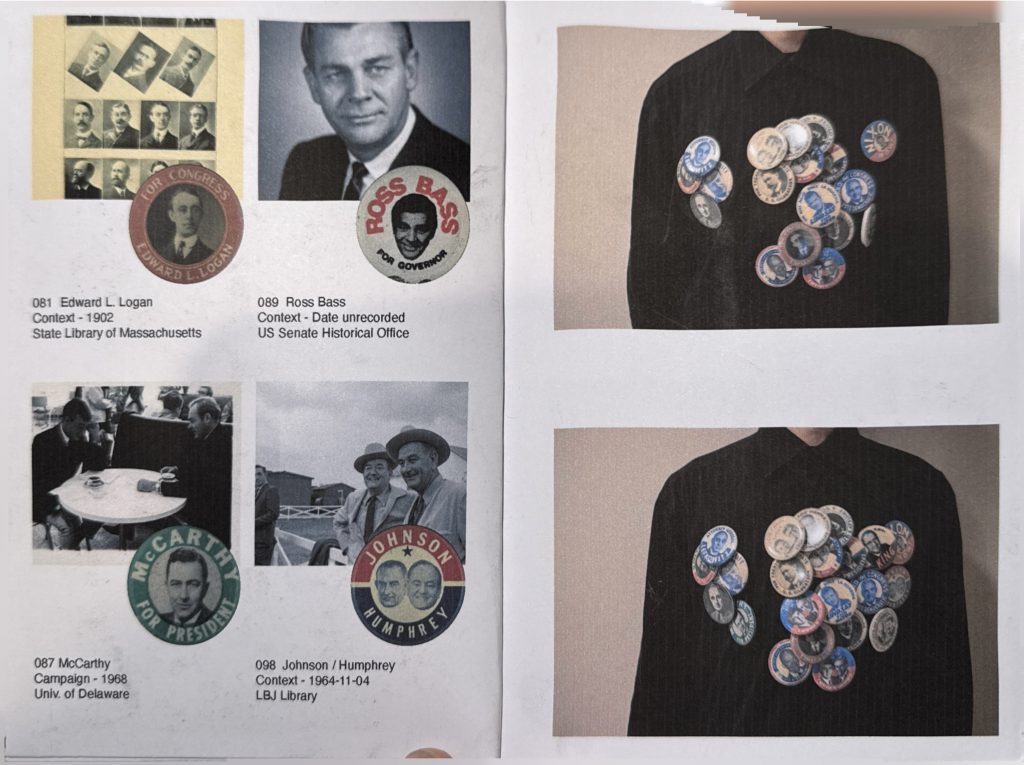
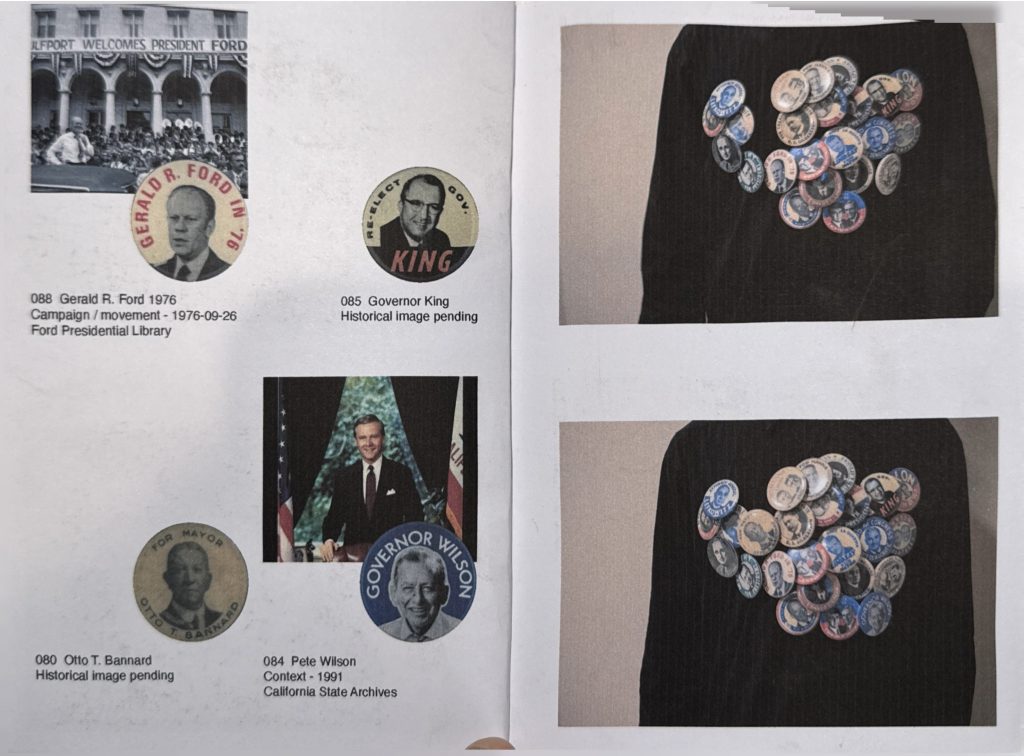
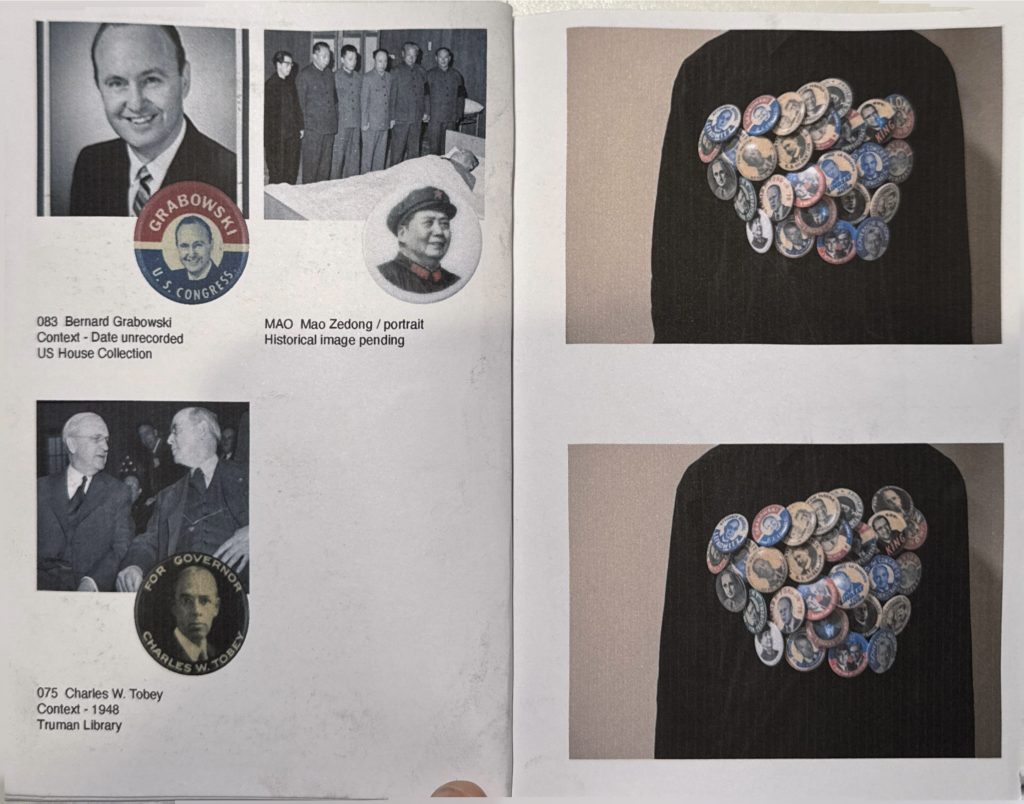
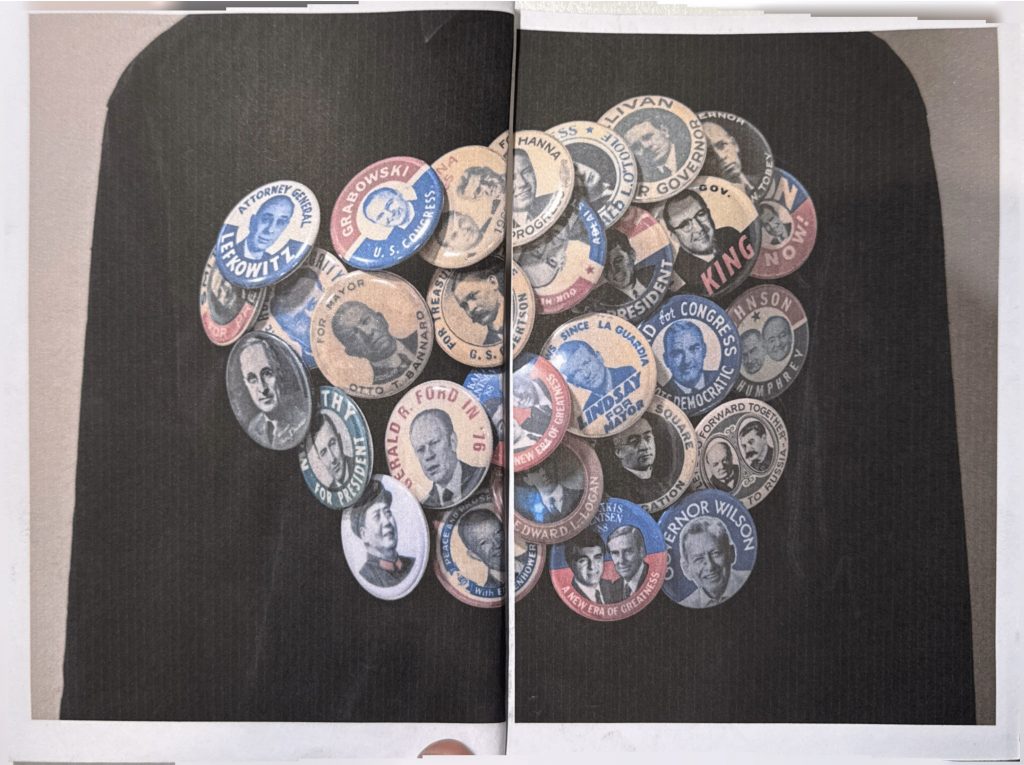
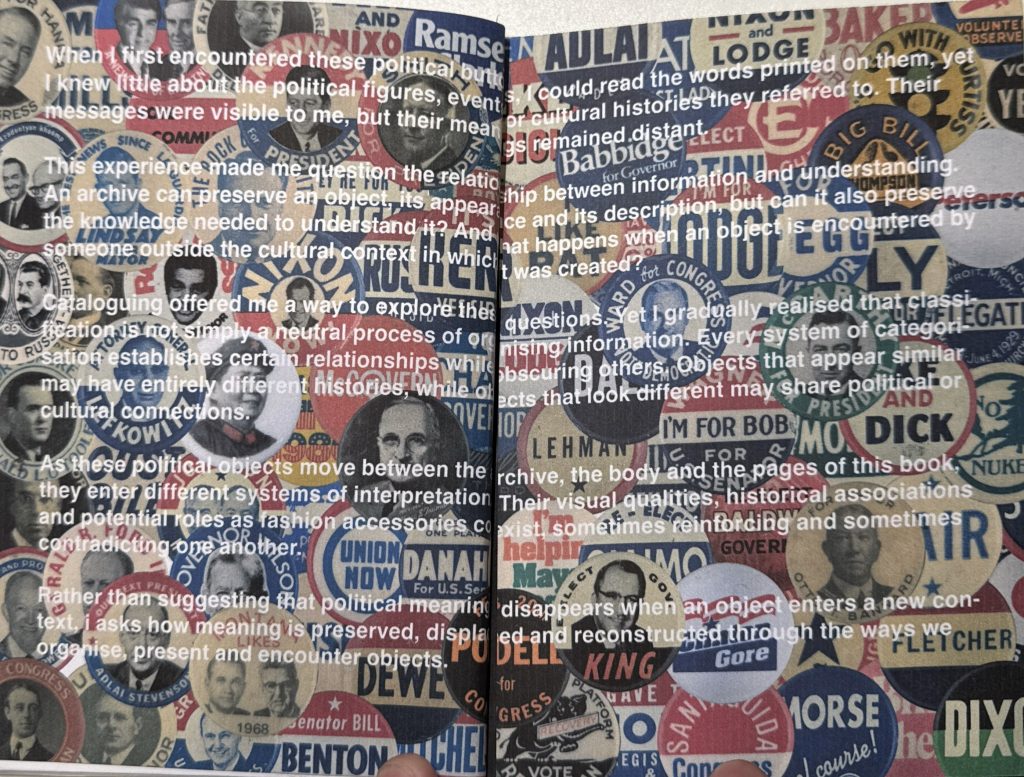
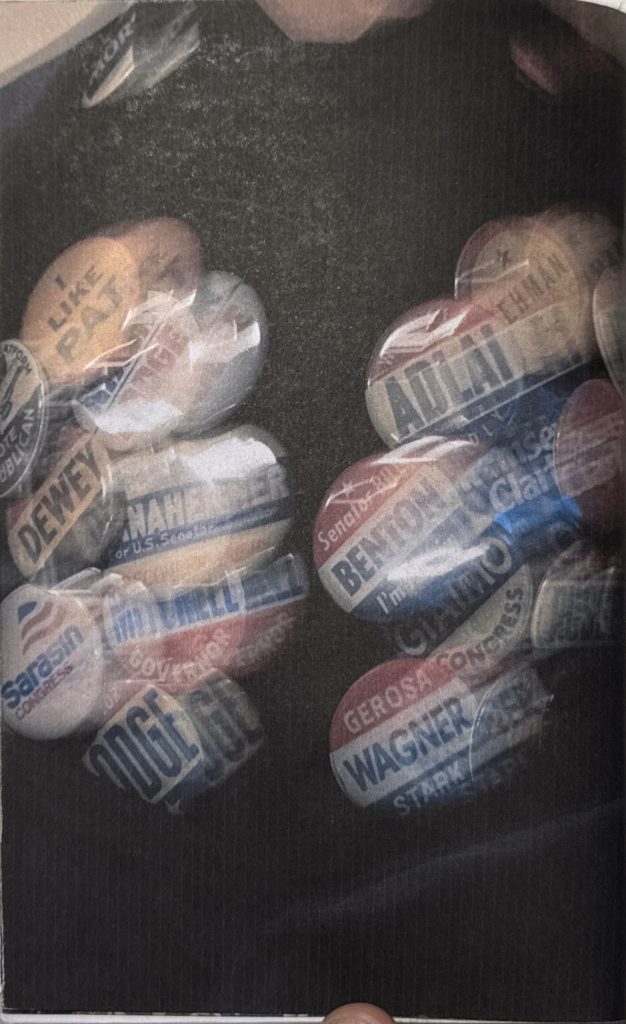
My intention is not simply to prove that political objects eventually lose their political meanings or inevitably become fashion commodities. Instead, I want to use this project to explore a question: When the same object moves across different times, cultures, and contexts of display, what determines how we understand it?
writing:
Leave a Reply